
High Viscosity Pumps: Key Design Features And Operating Principles

Temperature control and viscosity management strategies
Temperature has a strong, often exponential influence on viscosity for many fluids; modest heating can markedly reduce apparent viscosity and required drive torque. Common industrial measures include steam or hot-oil jackets, electric cartridge heaters, and insulated piping. Designers assess whether uniform temperature distribution through the pump and immediate piping is achievable, as temperature gradients can create local viscosity differentials that affect sealing and volumetric consistency. Safety controls and appropriate pressure-relief measures are typically specified when elevated temperatures are used.
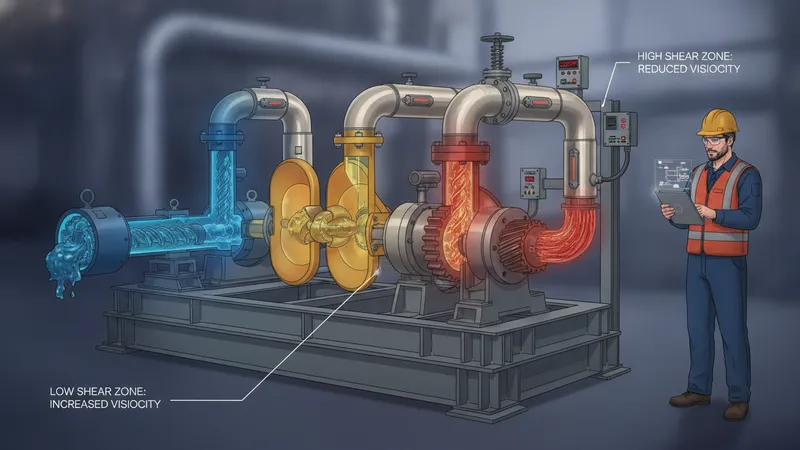
Shear-thinning and thixotropic fluids require distinct handling philosophies. For shear-thinning media, increased shear in the pump’s swept volume can lower apparent viscosity locally and improve flow, but excessive shear may alter product properties. Progressive cavity and lobe pumps often provide lower shear rates than gear pumps, which can be advantageous for maintaining product integrity. Engineers may test representative samples across shear ranges to determine acceptable operating envelopes rather than assuming uniform behavior.
Suction-side design is critical when temperature control is applied. Insulation and trace heating on suction lines can prevent cooling and re-thickening of the fluid before the pump inlet, which may otherwise increase start-up torque or cause air entrapment. When suction lift is required, designers may minimize lift distance and use priming strategies compatible with the fluid’s rheology. These details are framed as considerations that can reduce operational risk when properly engineered and validated.
System-level integration frequently includes monitoring to ensure viscosity management remains effective. Temperature sensors, torque meters, and flow meters provide feedback that can be used to adjust heating or speed. Control logic may allow gradual ramp-up of temperature or speed during start-up to limit transient loads. Such monitoring is an informational tool for operators and engineers to maintain stable performance rather than a prescriptive mandate for any single solution.