
Healthcare Data Analytics: Understanding Methods, Tools, And Use Cases

Data Collection and Integration Practices for Healthcare Data Analytics
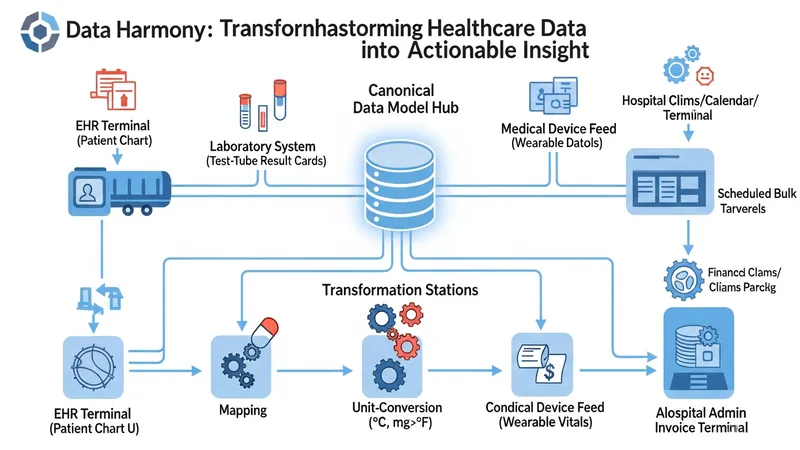
Data collection strategies in healthcare analytics usually combine scheduled bulk exports, real-time interfaces, and batched claims data. Source systems may include EHRs, laboratory information systems, device feeds, and administrative systems. Integration typically involves mapping source fields to a canonical model and performing unit and value harmonization. Data lineage tracking and provenance are often implemented so analysts can trace a result back to original sources. Such practices may reduce manual reconciliation and aid in diagnosing discrepancies during analysis cycles.
Standards and formats can influence integration complexity. Standards like HL7 FHIR or industry common data models can reduce ad hoc transformations but require governance to enforce consistent profiles and value sets. ETL platforms are frequently used to orchestrate ingestion, enrichment, and storage tasks; these platforms may support retry logic, schema validation, and basic anonymization techniques. Teams often plan for incremental ingestion and reconciliation routines to manage delays or partial updates from source systems.
Data quality assessment is typically performed early and iteratively. Common checks include completeness of required fields, validity against controlled vocabularies, temporal consistency, and duplication detection. Quality metrics may be tracked over time to identify drifts that could affect analytical outputs. Where possible, automated alerts and dashboards visualize key quality indicators so that operational owners can address upstream issues promptly.
Integration work often surfaces governance and privacy considerations. Access controls, role-based permissions, and audit logs are commonly implemented to limit exposure of sensitive records. De-identification or pseudonymization approaches may be applied before data is used for analytic model training or shared with broader teams. These controls are typically designed to balance analytical utility with privacy protections and regulatory requirements.