
Biomass Gasification Systems: How Thermochemical Conversion Produces Syngas For Energy

Feedstock Preparation and Handling for Biomass Gasification
Feedstock preparation frequently determines the stability and efficiency of a gasification system. Typical preparation tasks include size reduction, drying, and homogenization to achieve a consistent particle size and moisture content suitable for the chosen reactor type. Mechanical shredding or milling may be required for entrained-flow systems, while fixed-bed and fluidized-bed reactors often tolerate coarser material. Moisture management commonly involves passive drying or waste-heat integration; achieving moisture levels near 10–20% may reduce energy required for drying in many designs. Operators often monitor ash fusibility and mineral content since these factors can affect slagging and bed behavior.
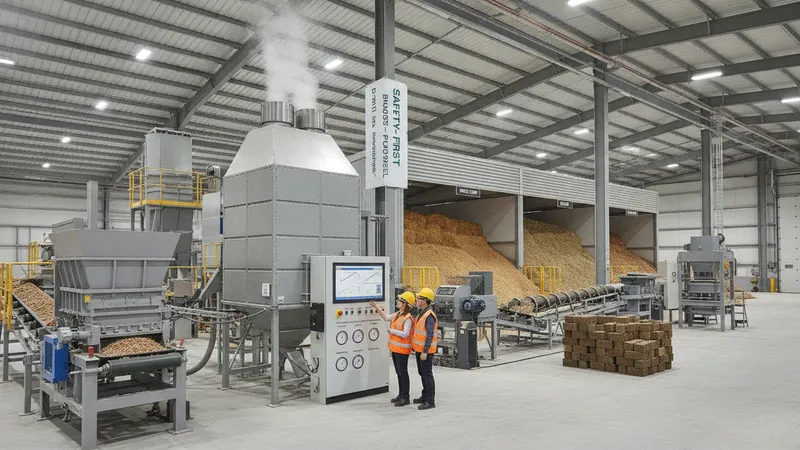
Logistics and storage are practical considerations that can affect feedstock quality over time. Biomass stored in piles may self-heat or degrade, altering moisture and calorific value; covered or ventilated storage reduces variability. Transport costs and seasonal availability often influence the scale of local supply chains and may favor densification methods such as pelletizing or briquetting to improve bulk handling. When feedstock originates from agricultural residues or mixed wood streams, preprocessing strategies can standardize properties to minimize operational interruptions caused by heterogeneity.
Water and oxygen content in feedstock influence gas composition and conversion efficiency. Higher moisture increases the latent heat demand for drying and can lower reactor temperatures unless supplemental heat is provided, which in turn may alter tar formation and gas yields. Conversely, steam co-feeding can be used intentionally to promote hydrogen production through water–gas shift and reforming reactions, though it requires management of steam-to-carbon ratios and catalytic behavior in downstream units. These trade-offs are often evaluated at design stage to match syngas targets.
Insider considerations include matching preprocessing to reactor tolerance and planning maintenance around expected ash behavior. For instance, alkaline residues in certain crop wastes can lead to bed agglomeration in fluidized systems, so blending or ash mitigation strategies may be considered rather than simply increasing temperature. Early-stage feedstock characterization—proximate and ultimate analysis—can inform which preparation steps most effectively reduce operational risk. These considerations may help designers and operators optimize throughput and syngas quality while minimizing unscheduled downtime.