
Applicant Tracking System: Key Features, Functions, And Use Cases

Integration, security, and deployment considerations for applicant tracking systems
Integration considerations often center on connectors for calendar services, assessment platforms, resume parsing engines, and human-resources information systems. API availability and standard data models can simplify integration work, while prebuilt connectors may reduce setup time. When relying on third-party parsing or assessment tools, organizations typically verify data mapping and test edge cases such as nonstandard resumes or multi-language submissions. Planning for integration testing and monitoring is often recommended to ensure data consistency across systems.
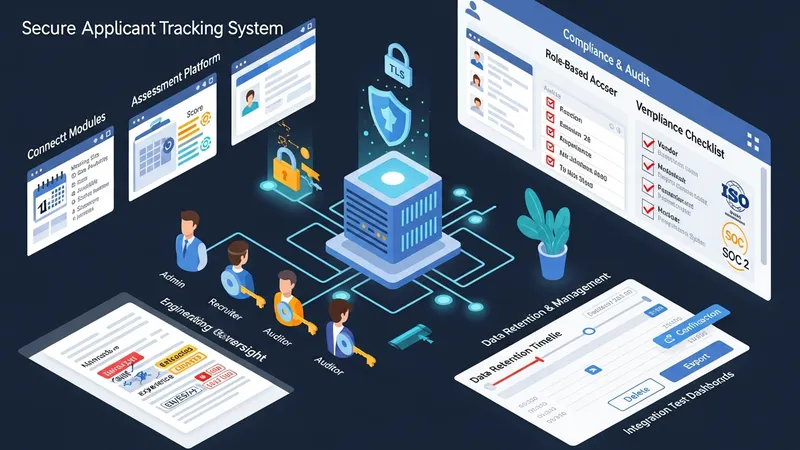
Security and privacy are recurring considerations, particularly where candidate personal data is collected and stored. Common practices include role-based access controls, encrypted data storage, transport-layer encryption for data in transit, and audit logs for access and changes. Data retention policies and the ability to process deletion or export requests are frequently part of compliance checklists. Organizations often evaluate vendor security certifications and documented practices as part of procurement and risk assessment processes.
Deployment models vary from cloud-hosted services to on-premises installations. Cloud deployments may offer faster updates and simplified maintenance, while on-premises installations can provide tighter control over data residency and custom integration. Hybrid approaches sometimes combine centrally hosted candidate records with locally managed onboarding systems. Deployment choice often involves trade-offs among maintenance burden, integration complexity, and organizational policies regarding data control and infrastructure management.
Operational considerations include training for recruiting and hiring teams, change management for new workflows, and maintenance of integration points. Training may focus on consistent usage of stages and feedback forms to support reliable reporting. Documentation of workflows, escalation paths for exceptions, and routine review cycles for automation logic are typical governance practices. These operational steps may help sustain the value of a platform over time by ensuring it remains aligned with evolving staffing needs and internal processes.