
Applicant Tracking System: Key Features, Functions, And Use Cases

Reporting, analytics, and collaboration features in applicant tracking systems
Reporting modules in candidate management platforms often include dashboards for funnel analysis, source attribution, and recruiter workload. Funnel analysis may display candidate counts by stage and conversion rates between stages, enabling teams to detect bottlenecks. Source attribution typically aggregates where candidates originated, such as direct applications, referrals, or external distribution channels, to inform sourcing strategy. Recruiter workload reports often show active assignments and time-to-fill indicators that may help balance responsibilities across hiring teams.
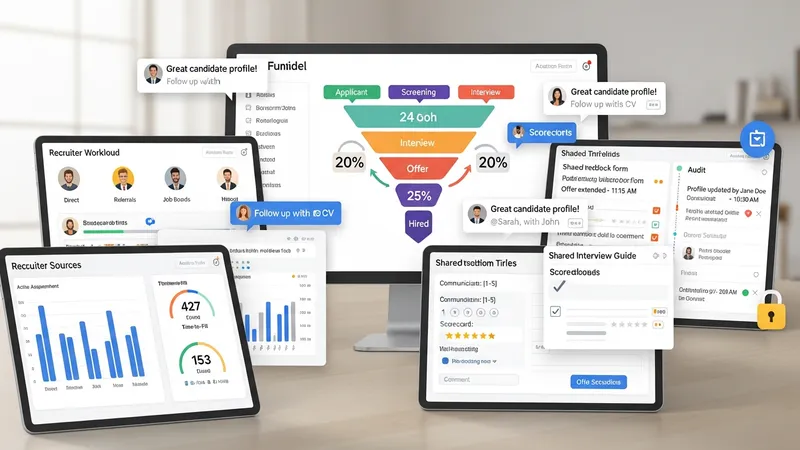
Collaboration features usually provide shared notes, interview feedback forms, and @-mentions or task assignments to coordinate reviewers. Standardized feedback forms with numeric scales and comment fields can support more objective comparisons across candidates. Shared interview guides and scorecards may keep evaluation criteria consistent across multiple interviewers. Access controls commonly limit who can modify feedback entries, preserving the integrity of evaluation artifacts and creating a clear record for later audit or review.
Analytics capabilities sometimes extend to predictive or historical trend analysis, though deployment and interpretation require care. Predictive signals may estimate time-to-fill or highlight positions that historically face longer pipelines, but these outputs typically depend on the quantity and quality of historical data. Trend analysis across hiring periods can reveal seasonal patterns or the impact of process changes; teams often use these insights to plan capacity or to adjust sourcing mixes rather than as definitive forecasts of future outcomes.
Data governance for reporting emphasizes consistent taxonomy and careful sampling. Consistent naming conventions for positions, sources, and stages help ensure that reports aggregate comparable records. Small-sample analytics should be labeled as provisional to avoid overinterpretation. Regular audits of field usage and clean-up routines for duplicate or obsolete entries may improve long-term reporting reliability and make collaborative decision-making more evidence-based.