
Sage Accounts Payable Automation: Understanding Key Features And Workflow Capabilities

Payment processing, reconciliation, and financial integration aspects
Payment processing within an automated accounts payable setup typically supports generation of payment batches, various payment methods, and export of bank-ready files. Payment scheduling rules often consider due dates, cashflow forecasts, and early payment terms. Integration with banking channels may use standard file formats or APIs to transmit payment instructions. Staging areas for payment approval are commonly used to allow finance staff to review and approve payment runs before transmission to the bank.
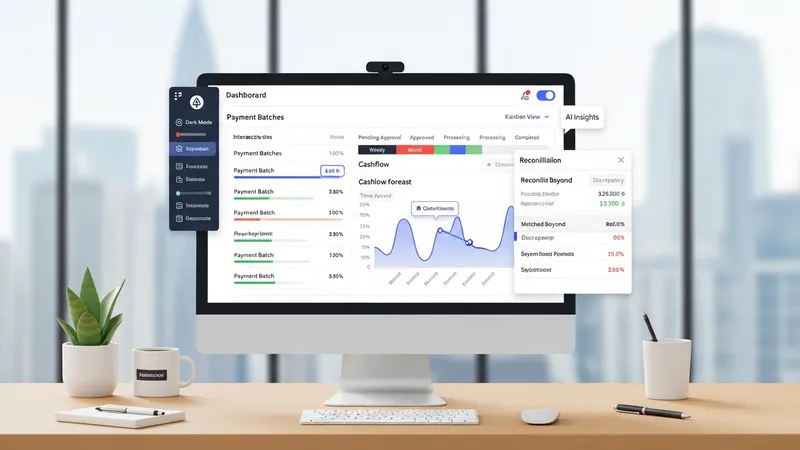
Reconciliation workflows link supplier invoices and payments to bank statements and ledger entries. Automated reconciliation tools may match remittance information to ledger transactions, flagging discrepancies for review. When connected to the general ledger, successful payment runs generate journal entries that reduce accounts payable balances and update cash accounts. Accurate mapping between invoice data and ledger codes is essential to reduce manual rework during month-end close activities.
Interfaces between automation modules and financial systems usually rely on defined field mappings and validation rules. Implementation may require mapping supplier IDs, tax codes, cost centers, and account numbers to ensure consistent posting. API-based integrations can reduce batch processing delays, while file-based exchanges may suit environments with legacy systems. Testing of end-to-end posting helps surface mapping errors and ensures that financial reporting reflects transactional reality.
Operational considerations may include retention of payment audit records, segregation of payment approval duties, and periodic review of payment methods for fraud prevention. Monitoring payment runs and reconciliation exception rates can help identify process weaknesses. Where partial automation is implemented, combining automated payment file generation with manual verification may offer a controlled transitional approach to full integration.