
Roof Repair: Identifying Common Roofing Problems And Early Warning Signs

Maintenance practices and monitoring tied to early warning signs
Scheduled maintenance routines often include gutter cleaning, clearing debris from valleys, and inspecting flashings and seals to limit secondary contributors to roof damage. These activities may slow the progression of common defects by preventing water accumulation and reducing mechanical abrasion. Regular checks of attic ventilation and insulation levels can also address moisture-related problems by reducing condensation risk. Maintenance intervals commonly vary with climate and roof material; many observers suggest seasonal reviews but adapt frequency based on observed rates of change rather than a fixed universal schedule.
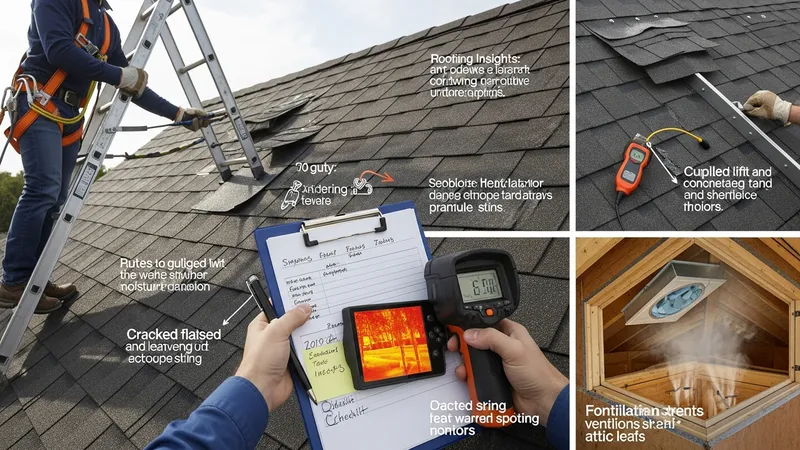
Recordkeeping and condition monitoring can make early warning signs more actionable by revealing trends such as recurring leaks at the same location or progressive shingle lift after storms. Photographic records, dated notes, and simple checklists often serve as an objective baseline for comparison over time. For example, noticing incremental granule loss concentrated on one slope over multiple seasons may suggest accelerated wear in that area, prompting closer inspection with moisture meters or targeted infrared surveys to determine if underlying layers are affected.
Addressing minor issues early can reduce the likelihood of more extensive deterioration, although responses should be guided by diagnostic findings rather than assumptions. For instance, replacing small sections of failed flashing or re-securing loose shingles in localized areas may resolve active leaks when underlying decking and insulation remain dry and sound. Conversely, when moisture meters and attic inspections indicate wet substrate or rot, more extensive measures may be needed. Decisions on repair scale typically rely on combining surface observations with diagnostic data to assess the true condition.
Environmental and site-specific factors are important to monitor as part of routine care. Proximity to trees, prevailing wind directions, and roof slope can influence the rate and type of wear an assembly experiences. For example, steep slopes may shed debris more readily but can show wind-related shingle damage; conversely, low slopes may be more susceptible to ponding and membrane wear. Noting these conditions alongside inspection findings helps prioritize monitoring and maintenance tasks that directly relate to the early warning signs previously observed.