
Payroll Software Companies: Key Features, Capabilities, And Use Cases

Integration, automation, and implementation considerations
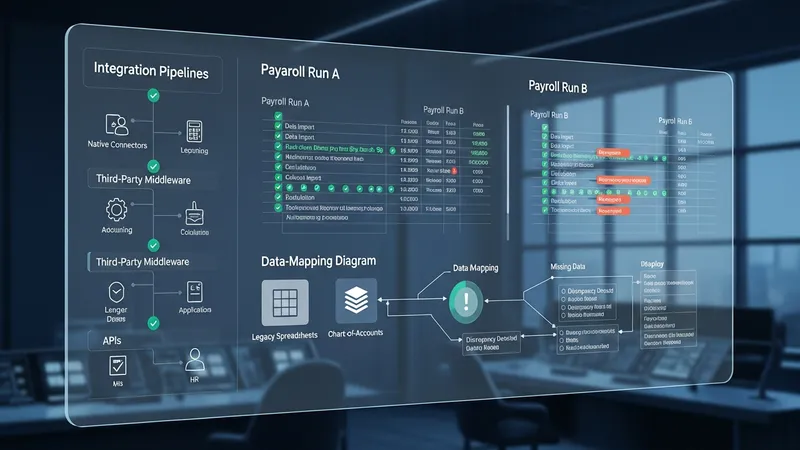
Integration methods commonly include native connectors, third-party middleware, and application programming interfaces (APIs). Native connectors may simplify integration with popular accounting or HR systems, while APIs provide flexibility for custom workflows. During implementation, data mapping from legacy systems—such as chart of accounts, employee records, and historical pay data—may require cleansing and validation. Organizations often pilot payroll runs in parallel to production to validate calculations and data flows before full cutover.
Automation often targets recurring tasks: scheduled pay runs, tax payment reminders, and report distribution. Automating data transfers from timekeeping and HR systems can decrease manual reconciliation. However, automation also requires control points, such as pre-run validations and approvals, to catch anomalies. Implementation teams typically design approval workflows and exception handling procedures that balance efficiency with oversight.
Data migration and testing are practical considerations during vendor selection. Migrating historical payroll data can be complex if formats differ or if legacy systems contain inconsistent records. Test scenarios usually include multiple pay cycles, varied employee types, and edge cases such as retroactive adjustments or terminations. Organizations commonly allocate time for iterative testing and reconciliation to reduce payroll errors at go-live.
Vendor-managed services versus self-managed platforms is another implementation choice. Some providers handle calculations, filings, and payments on behalf of the employer, while others supply software that the employer operates. This choice influences implementation timelines, internal staffing needs, and control models. Considering internal capacity for payroll administration and governance is often part of the selection and rollout process.