
Oncology Research And Treatment: Understanding Core Concepts And Care Pathways

Clinical study phases and data interpretation in oncology research and treatment
Clinical studies in oncology typically progress through defined phases with distinct objectives: early-phase studies assess safety and dosing, intermediate studies explore activity, and later-phase trials evaluate comparative effectiveness. Endpoint selection varies by phase and question: safety metrics are central early, while survival and patient-reported outcomes may be primary in later trials. Statistical power, control groups, and pre-specified analysis plans are critical elements that influence the interpretability of results. Understanding the phase-specific aims helps stakeholders place findings into appropriate clinical and regulatory context.
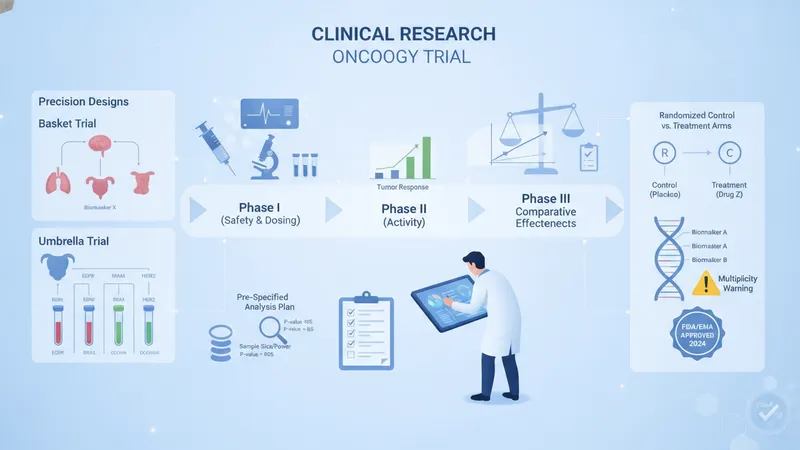
Adaptive and precision-oriented trial designs are increasingly used to match interventions to molecular features. Basket trials test a single intervention across multiple histologies that share a biomarker, while umbrella trials test multiple interventions within a single tumour type stratified by biomarkers. These designs may enhance efficiency in evaluating targeted hypotheses, but they require careful control of multiplicity and clear rules for interpretation. Results from such designs often require cautious interpretation about generalisability beyond specific biomarker-defined cohorts.
Evidence synthesis and regulatory considerations influence how trial results translate into practice. Systematic reviews and meta-analyses can pool data to estimate effect sizes across studies, often using pre-defined inclusion criteria. Regulatory agencies and guideline panels review the totality of evidence, considering study quality, consistency, and patient-centered outcomes. Post-approval studies and real-world evidence may further characterise safety and effectiveness in broader populations, providing complementary insights to controlled trials.
Interpreting trial outcomes in clinical contexts involves attention to absolute and relative measures, subgroup analyses, and patient-centered endpoints. Statistical significance does not always equate to clinical relevance, and effect sizes should be considered alongside potential harms, patient preferences, and care-system capacity. Reporting of adverse events, quality-of-life measures, and long-term follow-up data may inform how trial findings are integrated into care pathways and shared decision-making processes, recognising that evidence evolves over time.