
Industrial Noise Monitoring: Techniques For Measuring Workplace Sound Levels

Sampling Procedures and Workplace Noise Mapping for Industry Noise Monitoring
Sampling strategies should aim to capture representative conditions for the objectives at hand. For general exposure assessment, full-shift personal sampling may be prioritized to estimate average worker dose. For source characterization or control evaluation, short-duration task-based samples or area measurements near machinery can be appropriate. Planning typically considers variability in operations across shifts, seasonal changes, and maintenance cycles. Documentation of operational states and sample start/stop times helps link measured data to specific activities or processes that may drive noise levels.
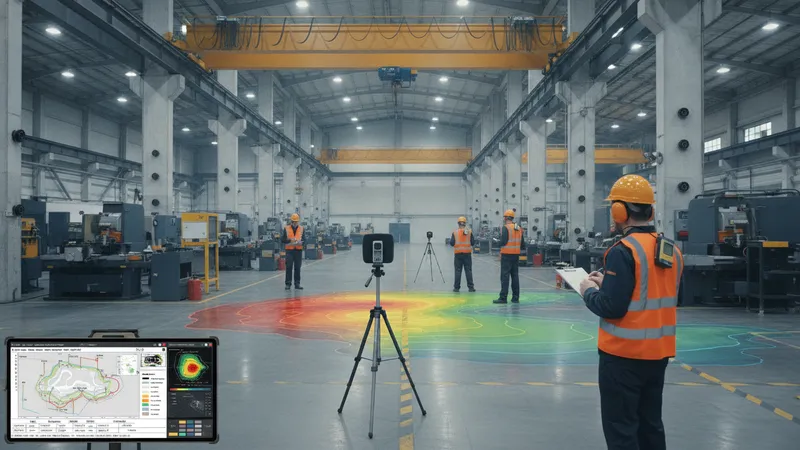
Workplace noise mapping integrates spatial sampling with modeling or interpolated sensor networks to visualize sound level distribution across an area. Maps are often created by combining point measurements taken at standardized heights and positions with modeling software that accounts for source geometry and reflections. Such maps can reveal spatial hotspots and guide placement of controls, administrative zones, or hearing protection signage. When creating a map, consistent measurement protocols and metadata—such as measurement height and surrounding obstacles—support interpretability and repeatability.
When using personal dosimetry alongside area mapping, cross-referencing the time-stamped personal exposure data with location-based maps can link exposure peaks to spatial contexts or tasks. Task-based sampling can help isolate contributions from specific equipment or operations. For facilities with intermittent operations, capturing representative cycles is important, and repeated measurements may be necessary to establish a range of expected conditions rather than a single snapshot.
Practical site considerations include safe placement of instruments, securing devices to prevent tampering, and minimizing flow-induced noise for outdoor or ventilated areas. For longer monitoring campaigns, periodic inspections of deployed sensors and verification of data integrity can identify issues early. Clear labeling of measurement points and consistent file-naming conventions facilitate later synthesis of multi-day or multi-location datasets and support transparent reporting of results.