
Independent Penetration Testing: Why Third-Party Security Assessments Matter

Reporting, remediation prioritisation and retesting after independent assessments
Reports from independent assessments usually present findings with contextual detail: description, evidence, risk rating and suggested mitigation paths. Common risk frameworks such as CVSS or similar qualitative scales are often used to communicate exploitability and impact. Organisations can use these risk indicators alongside business context — for example, the criticality of affected systems — to determine remediation priority. Neutral presentation of facts and reproduction steps helps technical teams address issues with clearer understanding of cause and effect.
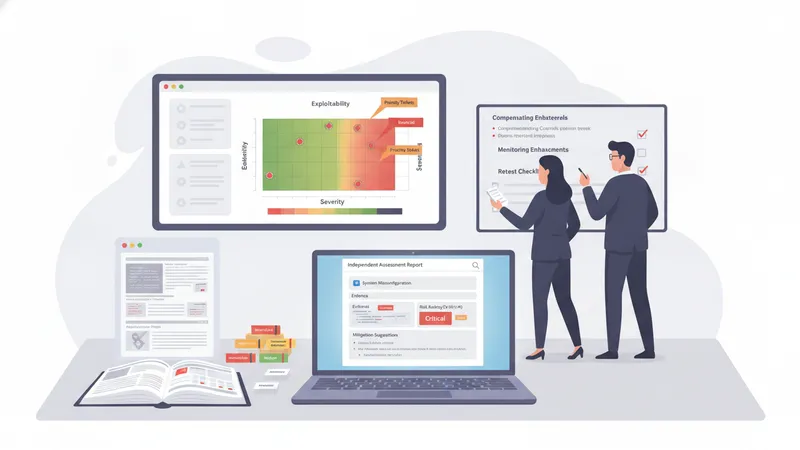
Remediation prioritisation commonly balances severity, exploitability and business impact. High-severity items with easy exploit paths and direct access to sensitive data often receive earlier attention, while lower-severity configuration issues may be scheduled with routine maintenance. Independent reports may also include recommendations for compensating controls or monitoring enhancements to reduce exposure where immediate remediation is not feasible. These recommendations are typically framed as options to consider rather than mandatory prescriptions.
Retesting or verification activities usually follow remediation to confirm that fixes have addressed the originally reported issues. Retests may be scoped to specific findings and may involve the same level of depth as the initial validation, often with reduced effort if changes are isolated. Organisations commonly plan retesting windows and acceptance criteria in advance so that closure of issues is transparent and measurable, supporting governance and audit needs.
Practical considerations include documenting the remediation lifecycle, preserving evidence for audits and tracking residual risk where some findings cannot be fully mitigated immediately. Independent testing can serve as a recurring quality check within a broader assurance programme, and repeated assessments over time may demonstrate trends in control effectiveness. Readers may review these structured processes to understand how external validation fits into ongoing security maintenance and governance.