
Heating Element Manufacturers: Key Production Processes And Industry Standards

Quality Control, Performance Testing, and Safety Practices for Heating Elements
Quality control typically integrates electrical, mechanical, and thermal verification steps. Electrical checks often consist of DC resistance to confirm target ohms and insulation resistance testing to detect leakage paths. Mechanical inspection ensures dimensional conformity, secure terminations, and proper sheath finishes. Thermal verification can include controlled power-up to measure surface temperatures and detect hot spots, as well as thermal cycling to observe changes in resistance or insulation over repeated heating and cooling. Sampling plans may vary with product criticality; safety-critical applications often require more extensive batch testing and documentation.
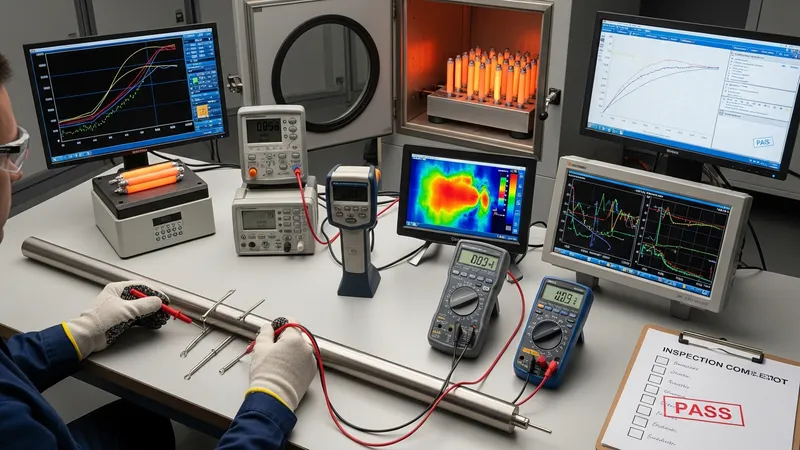
Performance testing often uses accelerated life or endurance tests to estimate wear modes such as oxidation, embrittlement, or insulation breakdown. Thermal-shock and vibration tests can reveal mechanical weaknesses in terminations or support structures. For radiant and infrared elements, spectral output and emissivity measurements may be performed to validate application suitability. Test protocols typically report conditions and criteria so purchasers and regulatory bodies can interpret results; they do not guarantee longevity but provide comparative data for design decisions.
Safety practices are implemented at both product and process levels. Grounding provisions, double-insulated designs, and temperature-limiting devices may be incorporated to reduce risk in service. Manufacturers often maintain work instructions and training for personnel handling high-temperature assemblies and welding operations to prevent defects and ensure worker safety. Documented traceability for raw materials and heat-treatment records may be retained to support investigations if failures occur in the field.
Documentation and certification practices differ by market and application. Many producers retain internal test records and conform to customer-specific quality plans, and some pursue third-party testing or certification when market access requires independent validation. For non-certified products, detailed datasheets and test reports can still inform buyers about expected performance characteristics and recommended installation conditions. These materials help end-users match element properties to duty cycles and environmental constraints without implying absolute performance guarantees.