
CRM For Small Business: Key Features, Functions, And Use Cases

Customer communication, workflow automation, and integrations in CRM for small business
Customer communication features in CRM systems may include e-mail logging, templated messages, SMS connectors, and in some cases, chat integrations. These elements are intended to centralize correspondence so that team members view a unified history and avoid inconsistent messaging. Automation features often complement communications by triggering follow-up messages after events such as form submissions, stage changes, or invoice issuance. Automations are typically rule-based and may perform actions like creating tasks, sending notifications, or updating record fields to reflect status changes.
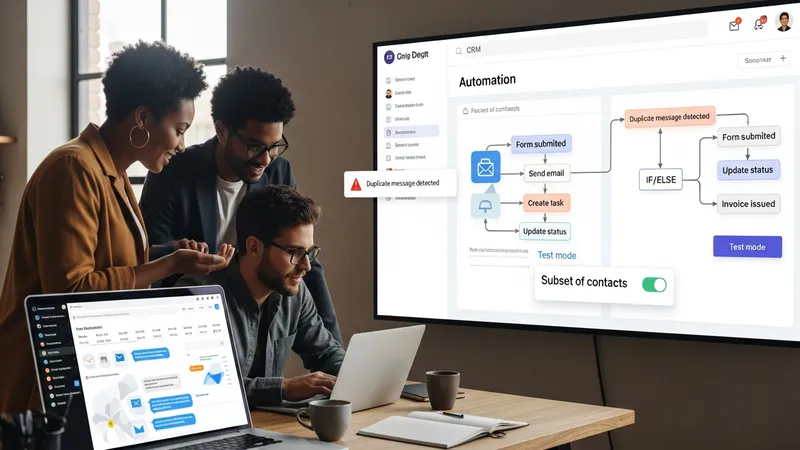
When implementing automations, small teams typically consider maintenance complexity and error handling. Simple automation rules—such as sending a confirmation message after a contact form is received—often produce clear benefits with limited upkeep. More complex sequences may require conditional logic and periodic review to ensure that branches remain relevant. Testing automations on a small subset of contacts before broad application can help catch unintended consequences, such as duplicate messages or incorrect field updates.
Integrations connect CRM data with external systems like billing, calendar, e-commerce, or marketing platforms. For smaller organizations, commonly used integrations include e-mail providers to capture correspondence, calendar syncs to record meetings, and payment processor links to attach transaction history to customer records. Integration choices often prioritize reliability and low operational overhead; teams may select connectors that offer straightforward mapping and logging, and periodically audit integration logs to confirm data consistency across systems.
Practical considerations include data mapping, error monitoring, and governance. Mapping ensures that fields in connected systems align semantically so that, for instance, a billing record’s customer identifier matches the contact record in the CRM. Error monitoring—such as reviewing failed syncs or queued messages—helps prevent data divergence. Governance measures, including access controls and periodic data cleanups, can help maintain data integrity as automations and integrations expand the flow of information between systems.