
CAASM: Understanding Cyber Asset Attack Surface Management Fundamentals

Operational Integration and Continuous Management in CAASM
Continuous management in CAASM emphasizes sustaining inventory accuracy and ensuring asset records remain current as environments evolve. Integration points often include automated connectors to cloud providers, identity systems, endpoint management platforms, and vulnerability scanners that run on schedules appropriate for each source. Change events—such as cloud instance creation or deprovisioning—may trigger inventory updates. Organizations typically plan for incremental rollouts of such integrations and establish monitoring to detect synchronization failures or anomalous data trends.
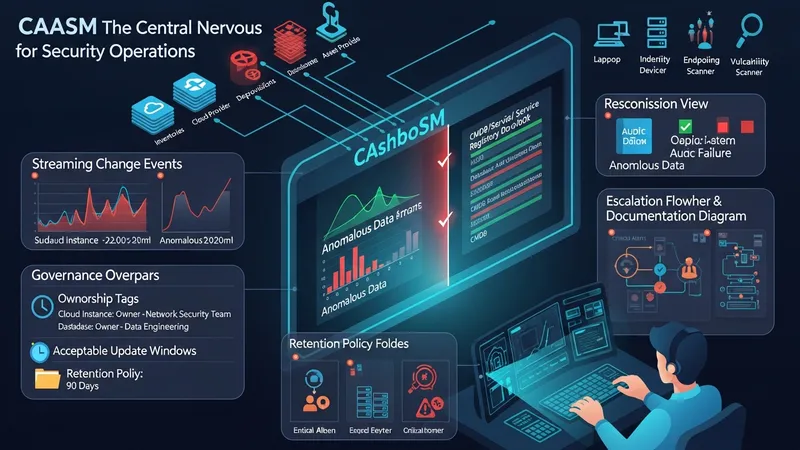
Governance practices help maintain CAASM effectiveness over time. Defining ownership for asset classes, specifying acceptable update windows, and recording retention policies for asset data contribute to predictable operations. Regular audits or reconciliation processes—comparing CAASM output against CMDB entries or service registries—can surface systemic gaps. Documentation of data flows and escalation procedures can also reduce confusion when asset discrepancies arise, supporting more timely corrective actions.
Automation can accelerate routine tasks such as deduplication, tagging, and evidence collection, yet organizations often balance automation with human review for ambiguous cases. Automation rules typically include thresholds and fallback paths to prevent erroneous updates to authoritative records. When automations modify asset metadata or trigger tickets, including context and provenance in the generated output often helps operators evaluate and act on the information more efficiently, reducing the likelihood of misinterpretation.
Measuring CAASM program health commonly involves tracking coverage, data quality, and responsiveness to change. Coverage may be assessed by the proportion of known asset classes represented in the inventory, while data quality may be gauged by correlation accuracy and update recency. Monitoring trends over time and conducting periodic reviews helps identify opportunities to refine collection methods, normalization rules, and integration points. These measures often support steady improvements in visibility and operational confidence without implying absolute completeness.