
AI-Powered Email Tools: How Automation Supports Lead Generation Workflows

AI-Powered Email Tools: Integration, analytics, privacy, and tool selection considerations
Integration with CRM systems, analytics platforms, and data warehouses is central to effective automated email workflows. Data synchronization patterns—near real time versus batch—impact how quickly new signals update scores and trigger sequences. When planning integrations, teams often assess identifier mapping, field-level consistency, and latency to determine whether a given tool can support intended automation use cases. Maintaining consistent contact identifiers across systems helps preserve state and avoids duplicate or conflicting outreach.
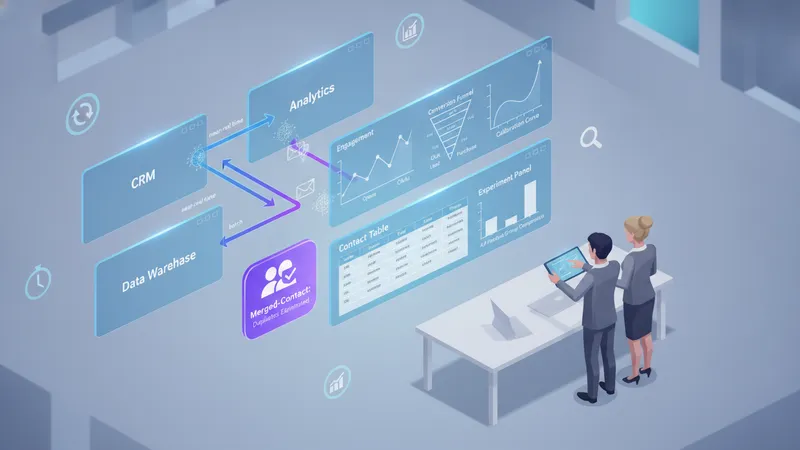
Reporting and analytics typically include engagement metrics (opens, clicks), downstream measures (lead conversions), and model performance indicators (score distributions, calibration). Dashboards that combine these signals can help teams monitor campaign health and detect performance drift. Many organizations use experimentation frameworks or holdout groups to evaluate whether automation changes materially influence lead progression, treating analytic outcomes as iterative evidence rather than definitive proof of causation.
Privacy and compliance considerations often shape what data can be used and how long it can be retained. Consent records, suppression lists, and data minimization practices may limit personalization. Teams frequently document data flows, retention policies, and access controls to align automation practices with regulatory and internal requirements. Conservative approaches—such as restricting sensitive attribute usage or anonymizing where possible—may reduce compliance risk while allowing for practical personalization.
Tool selection considerations typically weigh factors such as extensibility, model transparency, integration options, and operational support. Organizations often pilot multiple approaches to compare how well predictive scoring, content generation, and workflow orchestration interoperate within their tech stack. Selection decisions may prioritize maintainability and observability—how easy it is to inspect model outputs, update templates, and audit sequences—rather than relying solely on vendor feature lists. These considerations support sustainable automation that can be adjusted as data and business priorities evolve.