
AI CV Makers: How Automated Resume Builders Work And What To Expect

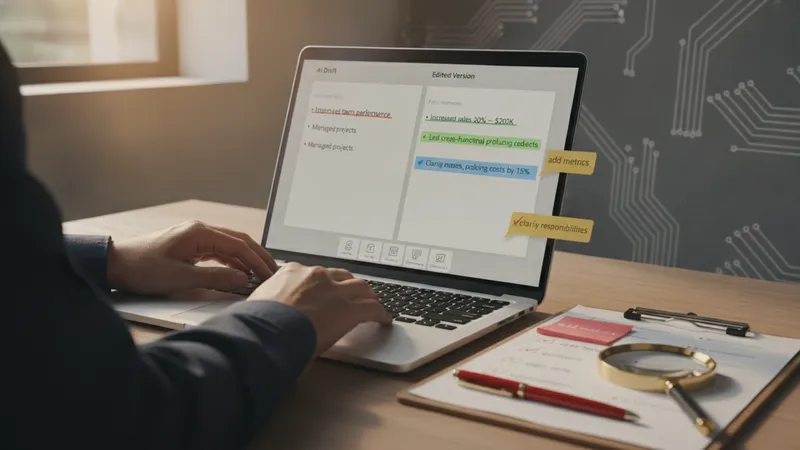
AI CV Makers: Editing workflow, templates, and human review
Human review remains a key step in workflows that use automated résumé tools. Generated text often benefits from editing to add role-specific metrics, clarify responsibilities, and remove vague phrasing. Editors typically check for consistent verb tense, clear quantification (for example, percentages or numeric impacts), and alignment between claimed skills and described tasks. Treating generated text as a draft rather than a final submission helps ensure accuracy and relevance.
Template selection affects presentation and perceived emphasis. Some templates place skills at the top, which can be useful for role transitions, while others foreground chronological experience for established career progression. Choosing a template should be informed by the user’s career narrative and the norms of the intended field. Templates that allow adjustment of section order can help users tailor emphasis without extensive reformatting.
Collaboration features such as comment threads, shared editing, and export history support iterative refinement. Career advisors or peers may suggest alternative phrasing or identify missing quantifiable outcomes. Version control is useful when tailoring documents for multiple role types to avoid confusion between versions. As a consideration, retaining a master copy that contains all experience and achievements enables faster adaptation to future role-specific edits.
Limitations of automated systems include context gaps and potential overreliance on common phrasing. To mitigate these issues, reviewers may cross-check technical terms, include role-specific details, and verify dates and employer names. Combining automation for structure and phrasing with careful human editing for specificity often yields the most reliable outcome. Concluding reviews by reading the résumé aloud or asking a peer to summarize the candidate’s strengths can reveal areas where generated language may be unclear or non-specific.