
Agricultural Machinery: How Equipment Selection Influences Farm Productivity

Sizing, capacity, and matching machinery to farm scale
Determining appropriate machine size typically starts with estimating peak seasonal workload and desired completion windows for tasks like planting and harvest. Smaller operations may favor compact tractors and narrow implements that are easier to manoeuvre and cheaper to operate, while larger enterprises often use higher-horsepower tractors and wider implements to increase daily coverage. Capacity metrics such as hectares per hour, liters of fuel per hour under load, or tonnes per hour for harvesters can support comparisons, acknowledging that these figures vary with field conditions, operator skill and crop characteristics.
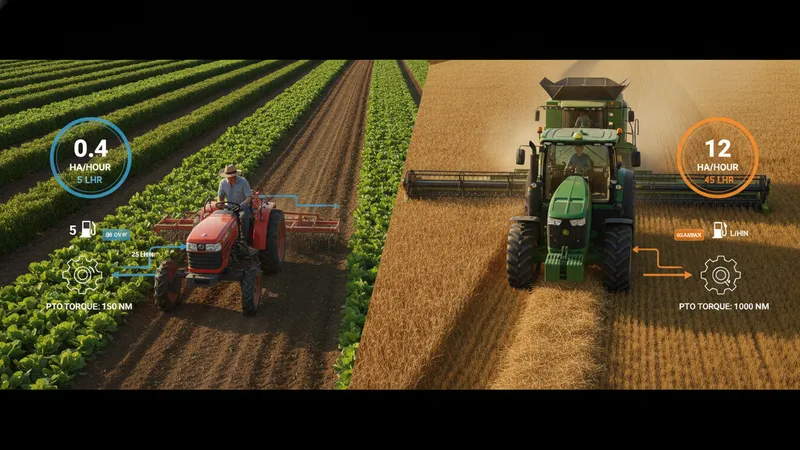
Power and transmission choices influence implement compatibility and operational flexibility. A tractor’s rated engine power, PTO capacity and torque characteristics determine which implements it can drive effectively. Continuously variable transmissions may provide smoother speed control for implement-driven work, while gear and power shift transmissions can offer durability under heavy load. Matching hydraulic flow and control circuits is also necessary for implements requiring proportional control. Considering these elements together often prevents under- or over-sizing and aligns machine capability with expected tasks.
Transport and roadability are practical constraints in many operations. Wider implements and larger machinery may require special permits or escorts on public roads in some jurisdictions and may complicate access through gates or between fields. Transport dimensions also affect storage requirements. Operators commonly weigh the trade-off between wider working widths that reduce field time and the complexity of moving larger machines between dispersed fields. Planning for turning radii and headland width helps ensure that selected machinery can be used effectively within the existing field layout.
Operator capacity and training are part of matching decisions. Larger or more complex machinery can demand higher operator skill for safe, efficient operation and routine diagnostics. Considerations such as camera systems, automation features, and electronic controls may reduce repetitive workload but can increase the need for basic troubleshooting competence. Many operations factor operator availability, experience and training potential into size and complexity choices, understanding that machine capability must be supported by human resources to achieve intended productivity.