
5G Unified Communications: How High-Speed Networks Support Converged Services

Network Slicing and Quality of Service for 5G Unified Communications
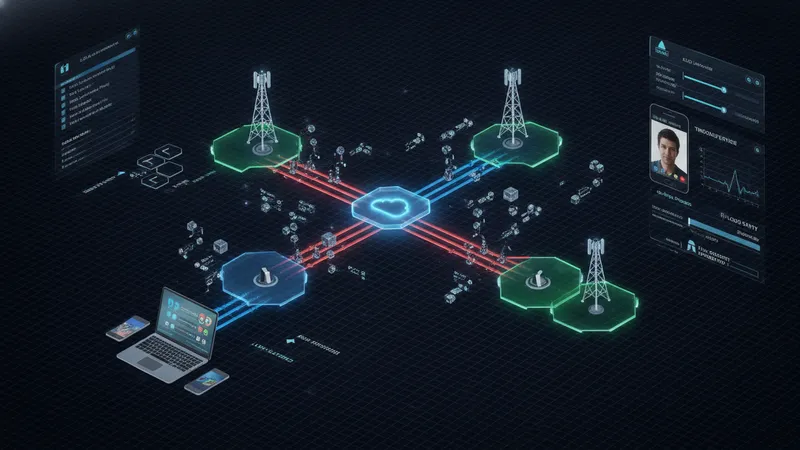
Network slicing may provide distinct virtual networks tailored to communication service needs, and these slices can carry differing QoS profiles for voice, video, and collaborative data. A slice intended for voice might prioritise low jitter and bounded latency, while a slice for file synchronization may emphasise throughput. In many operational models, slice configuration ties into orchestration systems that map service-level objectives to transport policies. When assessing slicing as part of unified communications, stakeholders often consider manageability, slice isolation, and the ability to adjust slice parameters as session loads shift.
QoS provisioning across radio, transport, and core domains typically involves marking and mapping traffic classes so that packet treatment is consistent end-to-end. Radio schedulers may allocate uplink and downlink resources differently depending on device conditions, which in turn can affect end-user media quality. Practical designs often combine network-side QoS with adaptive application behavior—such as scalable video codecs or variable bitrate audio—so services can maintain continuity when a slice cannot fully meet transient demand.
Operational considerations often include monitoring and analytics that correlate slice performance with user experience metrics like MOS-like scores, packet loss, and rebuffer events. These correlations may help teams adjust slice templates or orchestration parameters. Another practical point is inter-domain coordination: slices that traverse multiple administrative boundaries require agreed-upon interfaces, shared telemetry, and compatible orchestration policies to remain effective for unified communications use cases.
As an informational transition, readers may note that slice design choices typically interact tightly with edge placement and media handling strategies. Understanding how slice characteristics translate to actual packet treatment and media performance can help architects choose where to host conferencing or presence services to meet target behaviors without overprovisioning. Continued sections address edge and media handling in more detail.